
Hello from the studio...
This week: Migrants deals vs human rights; Malawi solar win; and other African stories for you, including positivity and resilience!
Dear readers,
It wasn’t a quieter summer for most people, was it?
Yet, now, it’s September, and in the usual cycle of news, most programmes are back, including our own podcast: Spotlight on Africa!
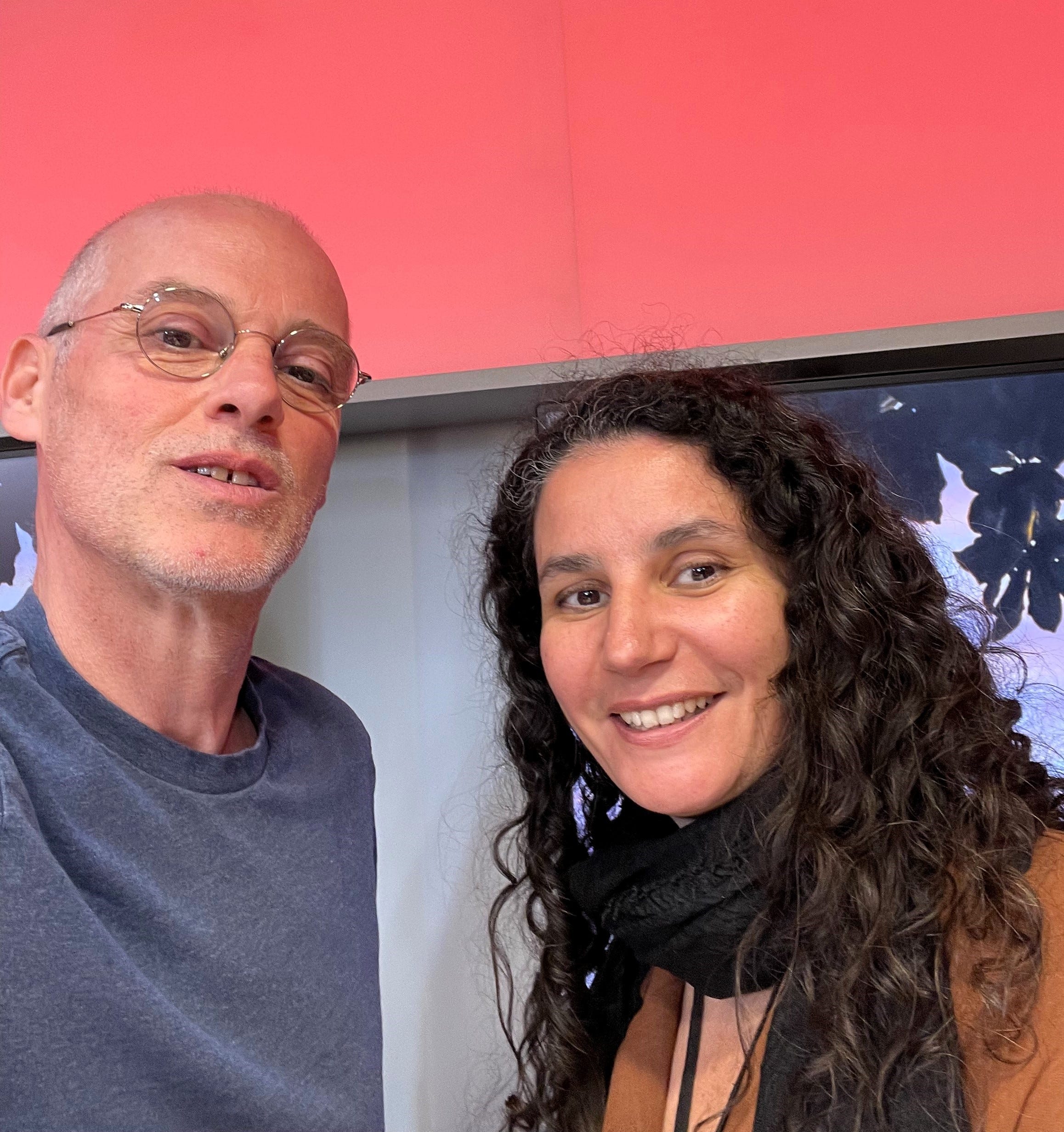
Spotlight on Africa returns after the summer break. In this episode, we travel first to Rwanda and then on to Malawi.
We begin by examining how the United States, along with some European powers, is looking to third countries in Africa to take in illegal migrants, with particular focus on Rwanda.
We then move to Malawi to explore how one village is now running entirely on solar energy.
Spotlight on Africa: Rwanda’s new migrant deal, Malawi’s first solar-powered village
» Listen from our website here: https://www.rfi.fr/en/podcasts/spotlight-on-africa/20250902-spotlight-on-africa-rwanda-s-new-migrant-deal-malawi-s-first-solar-powered-village
» And find us on Apple Podcasts too!
Rwanda received 7 people from the USA last week, as part of a deportation deal.
The Trump administration is pushing these sorts of controversial deals to send people to non-home countries including Eswatini, South Sudan and Rwanda…
Rwandan authorities said the first week of August that they had reached an agreement with the United States to take in up to 250 migrants, as part of a new deal that includes a cash grant.
The move is part of a wider effort by the US administration to remove migrants to third countries, and has raised fresh concerns over human rights, legality and the growing trend of wealthier nations paying others to take in deportees.
To understand the implication of this deal for migrants, for Africa and for human rights, I received Phil Clark, professor of International Politics at the School of Oriental and African Study in London, specialist of Rwanda, the great lakes region and of conflict and post-conflict issues in Africa. He’s been doing field research in Rwanda and beyond every year for the past 20 years.
Kasakula: The first 100 percent solar-powered village in Malawi
We then move to Malawi to explore how one village is now running entirely on solar energy.
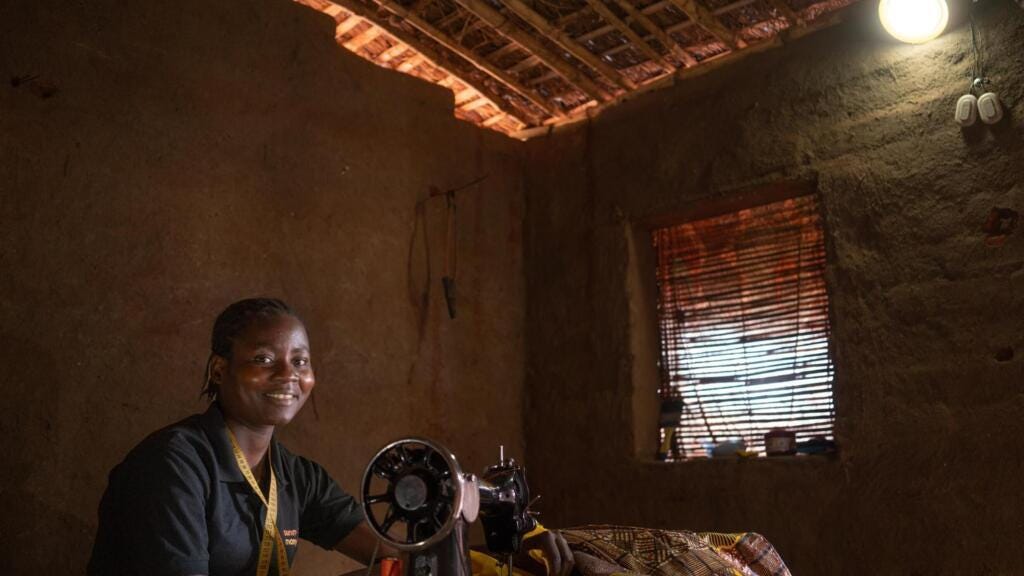
Meanwhile, in Southern Africa, a community of nearly 9,000 homes in rural Malawi became the country’s first village to receive 100 percent universal access to solar power also in the last week of August.
The project came to life through an award-winning energy model.
Kasakula town, where off-grid families have until now relied on lamps and candles, has now hit this milestone, according to Brave Mhonie, who is the general manager of the charity SolarAid Malawi and the president of the Renewable Energy Industries Association of Malawi.
SolarAid is a small international charity, and chose the remote and low-income village of Kasakula to pilot its model called Energy-as-a-Service.
And for more news:
In Senegal
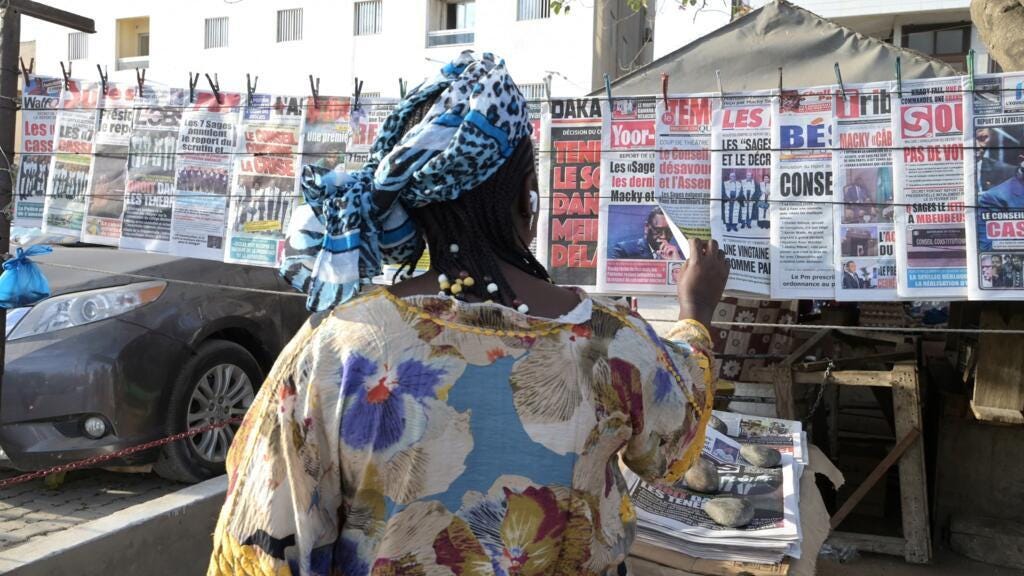
Financial crisis in privately owned media puts Senegal’s press freedom at risk
Senegal’s press is facing a worsening financial crisis, impacted by cuts to public subsidies and the collapse of advertising revenue. At its centre is the restructuring of Youssou N'Dour's Futurs Médias group, but other privately owned companies are now facing similar challenges and asking for government support.
Issued on: 01/09/2025
By: Melissa Chemam
The ‘Futurs Médias’ group (GFM) – which owns leading Senegalese media outlets including newspaper L'Observateur, radio station RFM and television channel TFM – says it is experiencing an "unprecedented" crisis.
With advertising revenue plummeting, print sales falling, rising costs and tax adjustments, the group has not paid some employees for three months.
For its management there is only one option left: restructuring the company.
The group was founded in 2003 by the internationally renowned musician and former culture minister, Youssou N’Dour, to provide an independent media platform that could offer diverse perspectives, countering the dominance of state-controlled media.
» Read the whole story from here: https://www.rfi.fr/en/africa/20250901-financial-crisis-in-privately-owned-media-puts-senegal-press-freedom-at-risk
Now, in case you missed it, my piece on how the scramble for minerals results in terrible crime in the Congo…
The term “Genocost” was first used in London in 2013 by a member of the Congolese Action Youth Platform, in a report documenting large-scale crimes in eastern Congo dating back to 1996. The report said several neighbouring countries, including Rwanda, Uganda and Burundi, shared responsibility.
DRC CONFLICT
DR Congo urges world to recognise 'Genocost' tied to decades of resource war
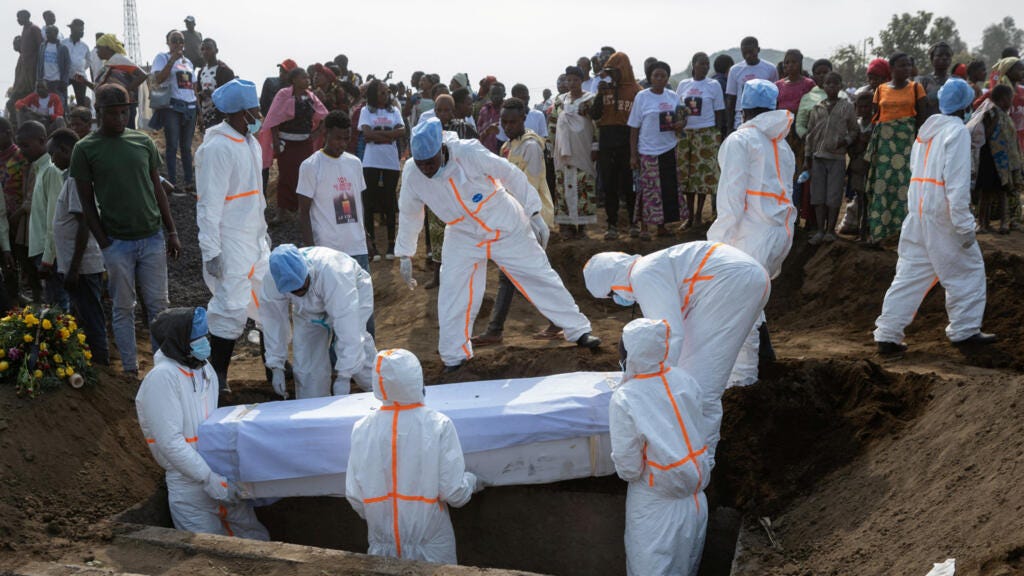
The Democratic Republic of Congo held a national day of remembrance this weekend for what it calls the “Genocost” – a term used to describe mass deaths linked to the exploitation of the country’s natural resources.
Issued on: 04/08/2025
By: Melissa Chemam
President Félix Tshisekedi used the occasion of an annual ceremony to call on parliament to adopt a resolution recognising the violence in eastern Congo as genocide.
"I solemnly call upon both houses of parliament to examine as soon as possible the adoption of an official resolution proclaiming the recognition of genocide committed on our territory," Tshisekedi said on Saturday.
He said the deaths of thousands of civilians in the east of the country meet the legal definition of genocide under the 1948 UN convention. He also promised to take the campaign for recognition to international forums.
The annual Genocost commemoration takes place every 2 August. It was first held three years ago. This year, a new memorial was opened near the National Museum in Kinshasa.
Read also: From 1960 to present day, 11 dates that explain the conflict in the DRC
Repeated conflicts
Eastern Congo, rich in minerals and bordering Rwanda, has faced repeated conflict since the Rwandan genocide in 1994. Violence has escalated again since early 2025.
The term “Genocost” was first used in London in 2013 by a member of the Congolese Action Youth Platform (CAYP). It followed the UN’s Mapping Report, which documented large-scale crimes in eastern Congo dating back to 1996. The report said several neighbouring countries, including Rwanda, Uganda and Burundi, shared responsibility.
For CAYP France, the creation of a national remembrance day is a major step. Gloria Menayame, a legal expert with the NGO, told RFI it was a “victory” but said more needs to be done.
But, she also said that it "feels unfinished".
"The adoption of the Genocost campaign is something we welcome," she said. "What we didn’t want was this partial appropriation that only takes what suits the authorities. There’s a lot of talk about international responsibility or the creation of an international tribunal. But they forget to put in place mechanisms to address crimes at the national level. We believe our government has the means, but lacks the will."
Read also: DRC conflict coltan entering EU via Rwandan smuggling routes, report finds
Long road to recognition
The idea of the Genocost began gaining support after 2013, as calls for reparations grew. Civil society groups pointed to a long history of resource-driven violence going back to colonial times.
Supporters of the campaign renamed a square in Kinshasa “Genocost Square” and began holding events there every 2 August. The date marks the start of the Second Congo War in 1998.
But the government only adopted the term officially in late 2022, after the M23 rebel group returned to action and tensions with Rwanda increased.
One key aim of the campaign is the creation of an international criminal tribunal for the DRC.
Tshisekedi also said he would raise the issue at the United Nations General Assembly in September.
Theoretical issues
Some legal experts say the Genocost concept remains controversial. Ithiel Batumike, a researcher at the Congolese think tank Ebuteli, told RFI the term is based on real anger and frustration over decades of violence, but it still needs to be defined more clearly in legal terms.
"All Congolese believe it is time to stop this spiral of violence," he said.
"The big questions all Congolese are asking themselves: 'Until when?' and 'Why does the international community act as if it doesn't see everything that is happening in Congo, when it is paying sustained attention to other crises where it has actually intervened to stop the massacres?'"
Another issue is the role of Congolese leaders and military officials in the conflict.
Menayame said some members of the Congolese government have been named in UN reports as being involved in crimes committed in the country.
These include several generals active in conflict zones. She said their actions should not be ignored.
A voyage of hope
The Global Sumud flotilla to depart for Gaza
Largest flotilla for Gaza set sail this week, hoping to end the blockade
Flotilla carrying activists, aid was setting sail for Gaza on Sunday 31 August 2025, despite a little delay due to strong wind
Authors, activists, and Portuguese politician Mortagua are among passengers
Activists call on politicians to pressure Israel to let the boats through
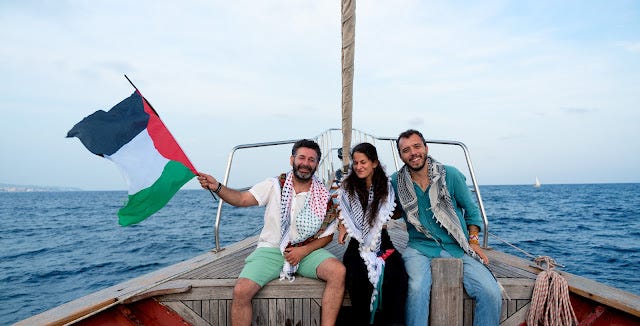
Pro-Palestinian activists are setting sail from Spain this week for Gaza in dozens of boats carrying aid have called on governments to pressure Israel to allow their flotilla - the largest to date - through the naval blockade: Hundreds of people from 44 countries departing from several ports to Gaza as part of the Global Sumud flotilla.
Sumud means "perseverance" in Arabic.
The vessels are to set off from the Spanish port city of Barcelona to “open a humanitarian corridor and end the ongoing genocide of the Palestinian people”, said the Global Sumud Flotilla.
Dozens more vessels are expected to leave from Tunisia other Mediterranean ports on 4 September.
The flotilla is expected to arrive at the war-ravaged coastal enclave in mid-September.
» More details on my blog: https://melissa-on-the-road.blogspot.com/2025/08/the-global-sumud-flotilla-departs-for.html
on a lighter note:
On Radio Bristol with DJ Style
Thirty five years ago, on October 15, 1990, the song 'Daydreaming' by Massive Attack came out in the UK as the Bristol band's first single, six months before their debut album, 'Blue Lines'....
Some of you may know, I wrote a book about Bristol’s music and art scene to talk about multiculturalism and activism in culture.
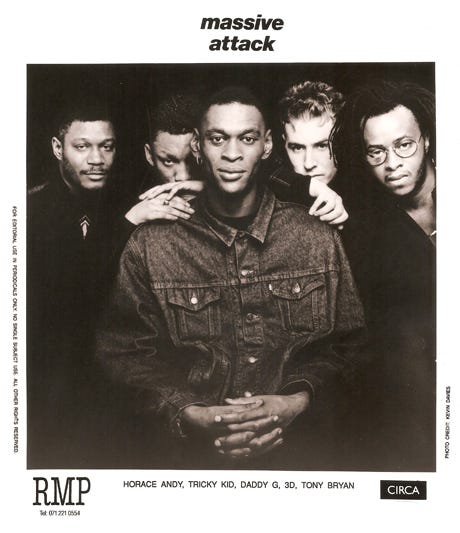
Last Friday, I looked again at what this sort of sound and its multiculturalism offered to England. It was on Radio Bristol, at 8:15pm local time, with the super cool DJ Style -
Link to listen online:
DJ Style sits in (29/08/2025)
https://www.bbc.co.uk/programmes/m002h8wc
Our 12-minute-long interview, isolated, here:
A final word, as Brave Mhonie said in conclusion at the end of this podcast episode:
“We have the responsibility to transform lives, to create a better life on Earth than what we found ourselves.”
Thanks for reading, linking sharing, and commenting! It helps tremendously to spread news from other parts of the world than just the usual suspects (the UN’s Security Council’s five permanent members for instance…).
With all my very warm wishes for this month of September,
melissa
Melissa Chemam
Journalist, Writer, Podcaster
Blog: https://melissa-on-the-road.blogspot.com/
Website: https://sites.google.com/view/melissachemam